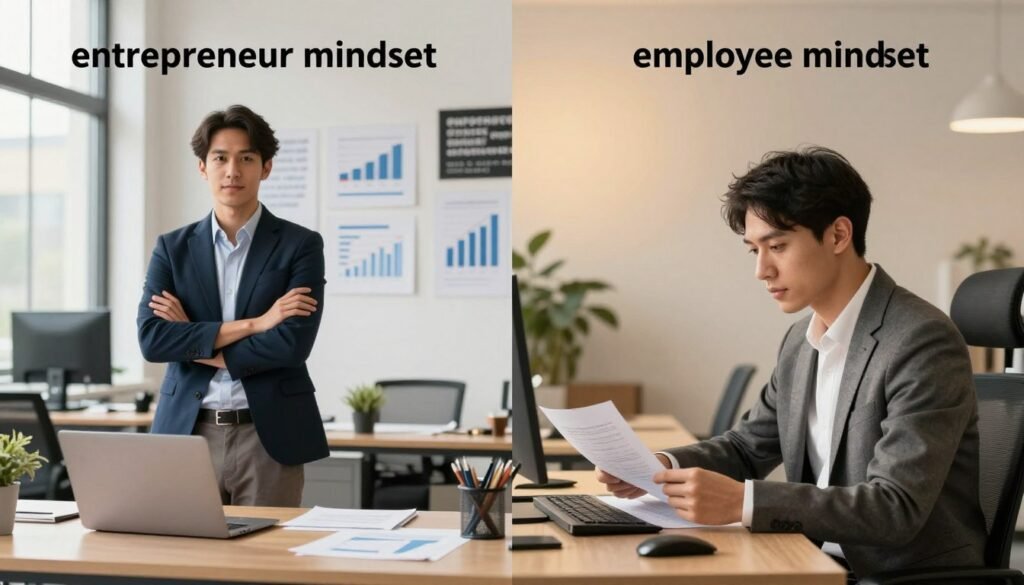
Entrepreneur Mindset vs Employee Mindset That Decides Your Financial Future
Understanding the difference between an entrepreneur mindset vs employee mindset can shape how you make decisions about money, work, long-term goals, and overall financial growth.
If you’re just starting to think about financial independence or building income beyond a traditional job, learning how these two ways of thinking influence risk-taking, problem-solving, and opportunity can help you choose your path more intentionally.
In this article, you’ll discover the key mindset differences, practical examples, and simple shifts beginners can apply to start thinking more strategically about their financial future — let’s explore how these perspectives can change the way you grow.
Key Takeaways
Your current approach to work and money is actively shaping your financial future.
Two distinct thought patterns exist, each with a different impact on your life.
Understanding these differences is about empowerment, not judgment.
This article will provide a clear comparison in easy-to-understand language.
You will finish with actionable insights to help guide your next steps.
Introduction to Mindset Dynamics
What if I told you that your thinking patterns are quietly building your financial future? Most people don’t realize how their daily thoughts about work and money shape their long-term results. This isn’t about magic or luck—it’s about understanding the different approaches people take.
The Role of Mindset in Financial Destiny
Your financial path isn’t set by your job title or education alone. It’s shaped by your fundamental approach to work. The employee mindset focuses on security and following established paths. The entrepreneurial mindset seeks to create new paths and build value.
Many traditional education systems emphasize following instructions and meeting defined standards, which can naturally reinforce employee-style thinking.
This creates dependency on external validation for our worth. The alternative approach asks “How can I create value for others?” instead of “Who will hire me?”
Context and Current Trends in the United States
In today’s world, especially here in the United States, these mindset differences matter more than ever. Recent surveys show that a significant portion of U.S. adults now report having a side hustle, reflecting growing interest in building income beyond traditional employment.
Many Americans now blend both approaches—keeping stable jobs while building something on the side.
The reality is that you don’t need to quit your job to benefit from entrepreneurial thinking. Understanding both ways of working gives you more control over your financial future. Current trends show this hybrid approach becoming increasingly common.
Your awareness of these dynamics is the first step toward shaping the financial future you want.
Understanding the Employee Mindset
For countless professionals, the certainty of a structured work environment brings peace of mind. This approach to work focuses on clear expectations and reliable outcomes.
Core Characteristics and Values
The employee mindset centers around security and predictability. People with this outlook value knowing exactly what they need to accomplish each day.
They receive a regular paycheck and benefits like health insurance. This structure allows them to focus on mastering their specific role.
Benefits of a Structured Work Environment
There are real advantages to this way of working. Fixed schedules help people plan their personal lives effectively.
Employees don’t worry about finding clients or business survival. They can concentrate on doing their job well within clear boundaries.
This approach values stability over uncertainty—a valid choice for those wanting predictable income and work-life separation.
Exploring the Entrepreneurial Mindset
When you’re the one calling the shots, your relationship with risk and reward changes completely. This approach to work focuses on building rather than following.
Vision, Risk-Taking, and Innovation
The entrepreneurial mindset thrives on seeing possibilities where others see problems. Instead of waiting for instructions, these creators ask “What can I build?”
They understand that failure isn’t the end—it’s valuable feedback. Every setback teaches them how to improve their approach next time.
Innovation drives everything they do. They constantly look for better ways to solve problems and create value for others.
Self-Discipline and Long-Term Focus
Without a boss setting deadlines, self-management becomes essential. Successful creators master their time because they know it’s their most valuable asset.
They learn to say no to distractions that don’t align with their main goals. This focus helps them build toward their vision day by day.
Key Differences: entrepreneur mindset vs employee mindset
Let’s explore what truly separates these two approaches to building your financial future. Understanding these distinctions can help you recognize which patterns you’re currently following.
Comparing Thought Patterns and Behaviors
The fundamental difference lies in how people view income generation. Many workers trade hours for dollars, focusing on earning money through direct effort. Business owners build systems that generate revenue even when they’re not actively working.
When challenges arise, employees typically follow established procedures. They wait for permission and guidance from superiors. Those with an entrepreneurial outlook see problems as opportunities to create value and innovate.
Risk tolerance represents another major dividing line. Workers often prioritize job security and avoid uncertainty. Business leaders embrace calculated risks because they understand that growth requires stepping outside comfort zones.
Perhaps the most revealing difference involves daily life perspective. Some people count down to weekends and vacations, seeking escape from their work. Others design a life they genuinely enjoy living every single day.
Recognizing which patterns you currently follow is the first step toward intentional change that serves your financial goals better.
Risk Tolerance: Security Versus Opportunity
How you handle uncertainty reveals a lot about your financial path. Your comfort with risk determines whether you lean toward security or chase opportunity.
This isn’t about bravery versus caution—it’s about choosing the level of risk that fits your current stage of life.
Employee Perspective on Stability and Predictability
Many workers value predictability above all else. They want a steady paycheck and clear responsibilities. This approach protects their job security and provides peace of mind.
When you have bills to pay and people depending on you, stability becomes essential. Employees focus on consistent performance within their role. This ensures steady progress without major disruptions.
Entrepreneurial Embrace of Uncertainty and Risk
Business owners see risk differently. They understand that growth requires stepping into uncertainty. Failure becomes part of the learning journey, not the end of it.
Successful entrepreneurs use setbacks as valuable data points. They adjust their approach based on what doesn’t work. This comfort with irregular outcomes separates them from traditional workers.
The right approach depends on your current life situation and what level of stress you can handle. Neither path is inherently better—both serve different needs at different times.
Decision Making and Accountability
The way you approach decisions at work reveals a lot about your financial path. Who you answer to changes everything about your daily experience and long-term growth.
Structured Processes Versus Strategic Ownership
Most workers operate within clear guidelines. They follow established procedures that ensure consistency across the company. This structured approach keeps tasks running smoothly without constant improvisation.
Employees focus on their specific role and responsibilities. They’re accountable for their individual performance and assigned tasks. The weight of the entire business doesn’t rest on their shoulders.
Business owners face a completely different level of responsibility. They make strategic calls that affect the whole organization. This shift from following rules to creating them demands bigger thinking.
The Impact on Business Growth and Personal Development
When you’re the owner, you consider market trends, competition, and financial performance simultaneously. Your decisions can make or break the business. This intense accountability forces rapid learning and personal development.
Successful entrepreneurs own their results completely. They learn from every outcome, whether positive or negative. This mindset drives innovation and growth that structured environments often struggle to achieve.
The bottom line: both approaches serve important purposes. Structured decision-making keeps operations running, while strategic ownership drives meaningful progress.
Time Management and Goal Setting Strategies
The way you organize your hours today quietly shapes where you’ll be financially in five years. Your approach to scheduling and ambition reveals your true financial direction.
Employees’ Daily Structure and Task Focus
Most workers operate with clear daily routines. They know exactly what needs completion each day and week. This structure creates predictability that helps balance work and personal life.
Employee goals typically come from supervisors or job descriptions. They focus on specific tasks within set timeframes. Performance reviews measure how well they meet these expectations.
Entrepreneurs’ Future-Focused Planning and Vision
Business owners juggle multiple priorities simultaneously. They must adapt quickly to unexpected challenges. Their time management focuses on activities that move the business forward.
These creators think months and years ahead. They set strategic goals based on where they want their business to be. There’s no boss telling them what to focus on each day.
Both approaches require strong time management skills. Workers maximize productivity within structure, while business builders create their own flexible systems for long-term success.
Fostering Innovation and Creative Growth
Innovation isn’t just about flashy new products—it’s about how people approach problems every day. The way we think about challenges determines whether we create real progress or just maintain the status quo.
Leveraging Creativity for Business Improvement
Many people focus on executing tasks efficiently using established methods. This keeps operations running smoothly but can accidentally limit creative thinking.
When you’re hired for a specific role, there’s often pressure to follow existing systems. Questioning processes or suggesting changes might feel risky. This approach maintains stability but can slow down improvement.
A different approach thrives on finding better solutions. Instead of copying what others do, innovative thinkers ask what’s missing in the market. They look for unique ways to serve people and create value.
For example, successful leaders don’t just follow trends—they spot opportunities others miss. This creative approach drives real growth in a changing world.
The good news? You can develop this skill regardless of your current situation. Start by treating challenges as opportunities to innovate. Set aside time to brainstorm improvements regularly.
If you want your career or business to move forward, make creativity a priority. The value you create tomorrow depends on the innovative thinking you practice today. Understanding these different approaches to work can help you build the skills needed for long-term in any business environment.
Personal Insights
I remember when I first started thinking about these two mindsets, I assumed I had to completely choose one or the other, and that pressure actually held me back.
In my early years, I leaned heavily toward security, but I slowly realized that even in a stable job, I could practice thinking more like an owner by taking initiative and looking for ways to create value.
I wasn’t suddenly fearless or ready to take big risks—I was just more aware of how my daily choices shaped my confidence and skills over time.
That shift didn’t change my life overnight, but it changed how I saw my options, and that perspective alone made me feel more in control of my financial direction.
Balancing Security and Freedom in Your Career
The most successful people I know don’t see career paths as either/or choices. They understand that you can blend different approaches to create the work life that fits you best.
Instead of forcing yourself to pick one way of thinking, consider what each approach offers. The real power comes from integrating the best qualities from both sides.
Integrating the Best Qualities of Both Mindsets
If you work for someone else right now, you can still think like a creator. Start by taking more ownership of your projects and looking for problems you can solve. Building skills that increase your value helps you gain more control over your financial life.
On the other hand, if you run your own business, structure and discipline become your best friends. Many successful entrepreneurs learn to focus on execution rather than chasing every new opportunity. This balanced approach reduces stress while maintaining growth.
The person who only values security might feel stuck over time. Meanwhile, the person who only chases freedom might face constant financial uncertainty. Smart money management means recognizing that life has different seasons.
Your takeaway: stop seeing these as all-or-nothing choices. Ask yourself what qualities from each approach would help you build the life you actually want. The real power lies in integration, not rigid identification with one way of thinking.
Conclusion
Your daily approach to work directly influences your income, growth potential, and long-term financial direction. The way you think about your career today shapes where you’ll be in five years.
One path values security and predictable income. The other embraces freedom and unlimited growth potential. Neither is inherently better—they’re different tools for different seasons of life.
The smartest people I know blend qualities from both approaches. They might work regular jobs while thinking like business owners on the side. Or they run their own businesses with the discipline of focused professionals.
Your next step? Pick one small shift from this article and practice it for 90 days. Maybe it’s taking more ownership at work or learning to embrace calculated risk. Small changes compound into completely different lives over time.
The power to design your financial future starts with how you think today.
Disclaimer: This article is for informational and educational purposes only and does not constitute financial, investment, or legal advice. Always conduct your own research and consult a qualified professional before making any financial decisions.
FAQ
Can I have an employee mindset and still be a business owner?
Absolutely. Many owners start by working *in* their business instead of *on* it. They handle tasks like an employee would. The key to growth is shifting to thinking like an owner—focusing on strategy, systems, and scaling, not just daily tasks.
Is one mindset better than the other for building wealth?
Not necessarily “better,” just different. An employee builds wealth through a steady paycheck, benefits, and disciplined saving. An owner builds through business value, equity, and potentially higher, but less predictable, returns. Your personal goals and risk tolerance decide which path fits you.
How does time management differ between these two perspectives?
An employee’s day is often structured by their job—tasks, meetings, and deadlines set by someone else. An entrepreneur must create their own structure, prioritizing activities that drive long-term growth, even if they don’t have an immediate payoff. It’s about working on the business, not just in it.
What’s the biggest difference in how each group views security?
Employees often see security as a stable job with regular pay and benefits. Entrepreneurs find security in building something they control—an asset that can generate income independently. It’s the difference between seeking job security and creating financial security.
Can I develop an entrepreneurial mindset while working a 9-to-5 job?
Yes, 100%. Start by taking ownership of your projects at work. Think about how you can add more value. Use your free time to learn new skills, explore ideas, or even start a small side project. It’s about how you think and act, not just your job title.
How does accountability change when you shift mindsets?
As an employee, you’re typically accountable for your specific tasks and responsibilities. As an owner, you’re accountable for everything—the successes, the failures, and the final results. There’s no one else to pass the buck to, which accelerates personal development.
 Skip to main content