Forex for Beginners Explained in Simple Terms: A Clear, No-Confusion Beginner’s Guide
If you’re new to trading, understanding forex for beginners explained in simple terms can feel overwhelming at first.
This guide breaks down the basics of currency trading into clear, easy-to-follow steps, showing how the forex market works, key terminology, and practical strategies to get started confidently.
By the end, you’ll have a solid foundation to begin trading without confusion. Let’s explore how to navigate the forex market with clarity and confidence.
Key Takeaways
This guide starts from absolute zero, making complex ideas easy to grasp.
Every term will be explained clearly before it’s used, with real-world examples.
You’ll gain a practical understanding of how the currency market functions.
The focus is on honest education, not unrealistic promises of quick wealth.
By the end, you’ll be able to make an informed decision about exploring this further.
Introduction to Forex Trading
Many people start their financial journey by learning about stocks, but there’s an even larger market waiting to be discovered. This is where currencies are bought and sold around the clock.
At its core, forex trading involves exchanging one nation’s money for another’s. Traders aim to profit when exchange rates shift in their favor.
Forex is the global exchange of currencies, similar to exchanging money for travel but on a much larger scale.
The forex market handles over $6 trillion daily, dominated by banks and large institutions. Retail traders like individual investors make up a small fraction of this volume but still participate actively.
What’s unique about this market is its 24-hour operation, five days weekly. Unlike stock exchanges with physical locations, currency trading happens electronically between networks worldwide.
Most activity here isn’t for travel or business needs—about 90% is pure speculation. Traders are betting on which currencies will rise or fall in value.
Your takeaway: You’re learning about the world’s biggest financial market where currencies trade continuously, with regular traders playing a meaningful role in this massive ecosystem.
What is Forex? Understanding Currency Exchange and Global Markets
When you travel internationally, you experience currency exchange firsthand—this simple act is the foundation of the massive forex market. It’s where nations’ money gets traded around the clock.
The Basics of Currency Conversion
An exchange rate shows how much of one currency you need to buy another. These prices change constantly based on global supply and demand.
Think about checking dollar-to-euro rates before a European trip. You’re seeing the same system that moves trillions daily. The difference is scale and purpose.
The Role of the Forex Market in Global Finance
This marketplace connects everyone from central banks to individual traders. Unlike stock exchanges with physical locations, it operates electronically worldwide.
Here’s something surprising: most activity isn’t for tourism or business needs. About 90% comes from speculation—traders trying to profit from rate changes.
The market is decentralized, meaning there’s no single headquarters. It’s a network of banks, brokers, and traders working across time zones.
While forex focuses on currencies, understanding different markets helps build a complete financial picture. If you’re curious about other opportunities, our stock market guide offers another approach to growing your knowledge.
Your takeaway: Forex is the global system where currencies trade continuously, with most participants aiming to profit from exchange rate movements rather than simply obtaining foreign cash.
Forex for Beginners Explained in Simple Terms
Currency trading might sound complex, but it’s built on a principle you already understand from everyday life. When you exchange money for a trip, you’re participating in the same basic system that professional traders use.
Imagine swapping dollars for yen at an airport booth. You’ve just completed a currency transaction. If exchange rates change favorably before you convert back, you could profit from the difference.
This is the essence of the game: buying when you expect a currency’s value to rise and selling when you anticipate it will fall. It’s the classic “buy low, sell high” strategy applied to national currencies.
Professional traders aren’t exchanging money for travel needs. They’re speculators aiming to profit from rate movements. The market responds to countless factors like economic news and global events.
Your takeaway: Currency trading means exchanging money to profit from value changes, using the simple principle of buying when you expect growth and selling when you predict decline.
How Forex Trading Works: Getting Started and Daily Operations
Getting started with currency trading involves understanding the different ways you can participate in the market. As a regular person entering this space, you’ll join through online brokers who connect you to the global currency exchange.
Retail vs. Institutional Trading Explained
When you begin trading currencies, you’re entering a market dominated by huge institutions. Banks and hedge funds move millions at a time in what’s called the interbank market.
Retail traders like us work with smaller amounts through brokers. Your broker shows you competitive prices and takes a small fee from each transaction.
Spot Forex and Futures: An Overview
You have two main paths for currency trading. Spot trading involves buying and selling at current market prices with no fixed expiration dates.
Futures contracts let you agree to exchange currencies at a set price on a future date. Most beginners start with spot trading because it’s straightforward and flexible.
There’s also forex options, which give you the right but not obligation to buy or sell at specific prices.
Start with a demo account to practice trades using virtual funds. Once confident, you can fund a live account. Choose a reputable broker with user-friendly platforms like MetaTrader 4/5 or cTrader.
Your takeaway: You trade through a broker who connects you to global markets, choosing between spot trading (immediate) or futures/options (scheduled), with spot being the most beginner-friendly approach.
Key Forex Trading Terminology for Beginners
Every field has its special words, and understanding these terms is your first step toward confident trading. Don’t worry if they sound strange at first—they’ll become second nature with practice.
Understanding Pips, Lots, and Leverage
A pip measures the smallest price movement a currency pair can make. If EUR/USD moves from 1.1000 to 1.1001, that’s one pip. Your profit or loss depends on how many pips the price moves.
Lots determine your trade size. A standard lot equals 100,000 units of currency. You can also trade smaller mini or micro lots.
Leverage lets you control large positions with little money. It amplifies both gains and losses, making it powerful but risky.
Essential Terms Every Trader Should Know
Each currency pair has a base currency (first) and quote currency (second). The price shows how much quote currency you need to buy one unit of base currency.
Other crucial terms include the spread (difference between buy/sell prices), margin (money required to open a trade), and position (your active trade).
Your takeaway: Master these core terms—pips measure movement, lots set trade size, leverage controls risk/reward, and pairs show what you’re exchanging.
Currency Pairs and Their Impact on Trading Decisions
Think of currency pairs as the fundamental building blocks of every trade you’ll make in the market. Every transaction involves exchanging one currency for another, and understanding these combinations is crucial for smart decisions.
When you trade, you’re always buying one currency while selling another simultaneously. This concept of a currency pair forms the basis of all market activity.
Major, Minor, and Exotic Pairs
Currency pairs fall into three main categories. Major pairs include the US dollar and currencies like the euro and Japanese yen. Examples are EUR/USD and USD/JPY.
Minor pairs don’t involve the US dollar but still feature major world currencies. Think EUR/GBP or AUD/CAD. These have decent trading volume but less than majors.
Exotic pairs combine a major currency with one from an emerging economy. USD/TRY or EUR/ZAR fall here. They can be unpredictable and riskier for new traders.
Liquidity and Volatility in Currency Markets
Liquidity measures how easily you can buy or sell without affecting the price. Major pairs like EUR/USD have high liquidity with many buyers and sellers.
Volatility shows how much and how quickly prices move. High volatility means bigger potential profits but also greater risks. Major pairs typically have steadier movement.
Your takeaway: Start with major currency pairs for better liquidity and more predictable price action. Avoid exotic pairs until you gain experience and confidence in your trading skills.
How to Read Forex Quotes and Exchange Rates
Understanding how to interpret price quotes is like learning to read a new financial language. Those numbers tell you exactly what it costs to exchange one currency for another.
Every quote follows a simple left-to-right pattern. The first currency is called the base currency, and it always equals one unit. The second is the quote currency, showing how much of it you need.
Let me give you a clear example. If you see EUR/USD at 1.0900, this means one euro equals $1.09 US dollars. The number represents the current exchange rate between these currencies.
When USD/CAD shows 1.3400, you’re looking at how many Canadian dollars one US dollar can buy. This precise reading is crucial because misinterpreting the quote can lead to trading in the wrong direction.
The price is constantly moving based on market activity. That 1.0900 might change to 1.0905 seconds later if the euro strengthens. You’ll always see two prices: the slightly higher “ask” when buying and lower “bid” when selling.
For a deeper dive into interpreting these numbers, check out our guide on how to read and understand forex.
Your takeaway: Always read currency pairs left to right, where the number shows how much of the right-side currency equals one unit of the left-side currency. Remember the price is always in motion.
Risk Management and Leverage in Forex Trading
If there’s one lesson I wish every new trader would learn from day one, it’s how to manage risk properly. Leverage is the tool that makes this especially important—and dangerous if misused.
Leverage lets you control large positions with little money. For example, 50:1 leverage means $1,000 can control $50,000 in the market. This amplifies both profits and losses dramatically.
Leverage varies by broker and region. For example, U.S. brokers may limit retail forex leverage to 50:1 on major pairs. Using high leverage can amplify both profits and losses, so risk management is crucial.
Smart risk management starts with these rules:
Never risk more than 1-2% of your account on any single trade
Always use stop-loss orders to limit potential losses
Choose appropriate position sizes—bigger isn’t always better
When you hold positions overnight, you might pay or earn interest based on the currency pair’s rate differences. This “net financing rate” can affect your overall profit.
Your takeaway: Use leverage cautiously, protect your account with strict risk limits, and remember that survival in trading matters more than chasing big profits.
Economic Indicators and Their Role in Forex Movements
The numbers on your trading screen don’t change randomly—they’re driven by real-world economic forces. Understanding what moves currency prices will help you make smarter decisions in the markets.
Impact of Central Bank Announcements and Interest Rates
Central banks control the money supply for their countries. When they change interest rates or announce new policies, currency values can swing dramatically.
Higher interest rates typically strengthen a currency because investors seek better returns. Quantitative easing—injecting more money into an economy—often causes currency prices to fall.
These announcements create some of the most volatile trading moments. Prices can jump 50-100 pips within seconds of major news.
How Global News Influences Currency Prices
Economic data like employment reports and GDP growth give clues about a country’s health. Positive news encourages investment, increasing demand for that currency.
Market sentiment—the overall mood of traders—can create self-fulfilling momentum. If everyone believes a currency will rise, their collective buying can make it happen.
Political events, trade agreements, and even natural disasters affect currency values too. Learning to read an economic calendar helps you avoid surprise moves.
Your takeaway: Stay informed about economic data and central bank policies. Understanding how these factors drive currency values is essential for smart trading decisions.
Trading Platforms, Tools, and Educational Resources
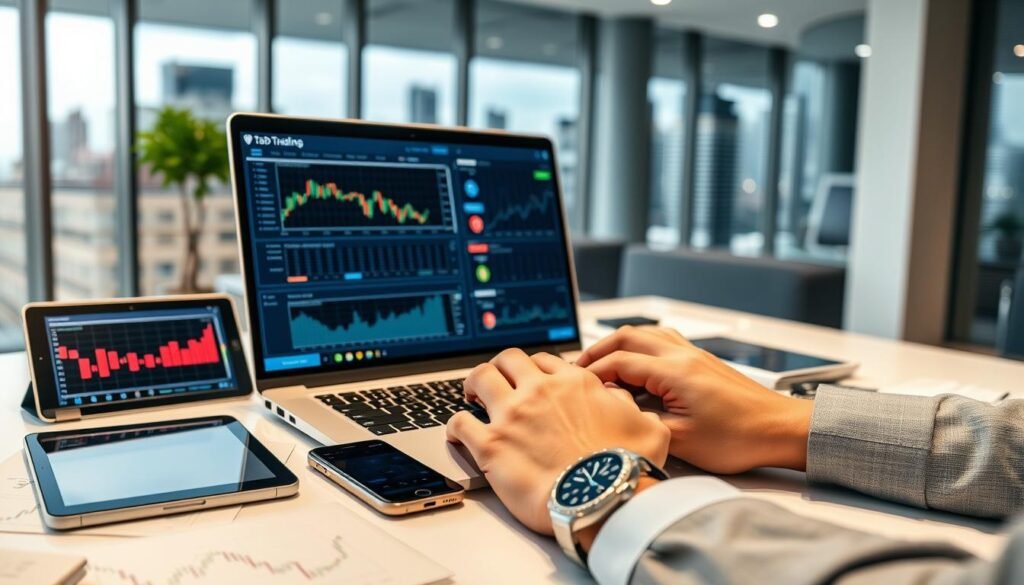
Your trading platform is like the cockpit of an airplane—it’s where you’ll control everything and make all your important decisions. This software connects you directly to global markets and lets you execute trades with just a few clicks.
Most brokers offer either their own custom platforms or industry standards like MetaTrader 4. When choosing, look for user-friendly interfaces and reliable execution speeds. Good charting tools and educational resources are essential for building your skills.
Before risking real money, use demo accounts to practice. These simulate real market conditions using hypothetical funds. Spend weeks testing strategies and learning the platform without financial pressure.
Brokers make money through the spread—the difference between buy and sell prices. Educational resources like trading courses help you understand these mechanics and develop confidence.
Essential tools will become your daily companions:
Economic calendars for tracking important events
Pip and position size calculators
Advanced charting software for analysis
Your takeaway: Start with a reputable broker offering a solid platform and demo account. Use educational resources to build knowledge, and don’t trade real money until you’re consistently profitable in practice.
Navigating the 24-Hour Forex Market and Global Trading Sessions
Unlike traditional stock exchanges with fixed hours, the currency market operates on a continuous global schedule. This means you can trade almost any time that fits your daily routine. The market runs 24 hours a day during the business week.
Trading follows the sun around the world. It starts in New Zealand and Australia, then moves through Asia, Europe, and finally North America. Each region has its own active trading session with different characteristics.
The London and New York sessions typically see the highest volume and movement. The Asian session is often quieter. When two sessions overlap, like London and New York from 8 AM to 12 PM EST, liquidity and opportunities peak.
Because the market runs almost non-stop, timing matters. Focus on trading when your chosen currency pairs are most active. Avoid slow periods with minimal price movement.
The market closes Friday evening and reopens Sunday evening. This gives you the weekend to plan and analyze. Remember that holding positions over the weekend carries extra risk if major news breaks.
Your takeaway: The 24-hour nature gives you flexibility, but focus on active sessions for your chosen pairs. Be strategic about when you open and close positions during the week.
Personal Insights
When I first started exploring forex, I remember feeling completely overwhelmed by all the terms—pips, lots, leverage—but I found that taking things one step at a time made a huge difference.
I began with a demo account, not worrying about profits, and focused on understanding how currency pairs moved in response to news or economic reports.
Over time, I noticed that even small, consistent observations about market behavior helped me build confidence.
Honestly, the biggest lesson I’ve learned is that patience and curiosity matter far more than trying to predict big wins right away.
Practical Examples of Forex Trading Strategies
Seeing real examples makes abstract concepts click into place. Let me show you how currency trades work in practice.
Imagine the EUR/USD pair trades at 1.0900. If you believe the euro will strengthen against the dollar, you buy this pair. You’re essentially exchanging dollars for euros at that price.
When the price rises to 1.1000 and you close your position, you make 100 pips of profit. The euro strengthened exactly as you predicted.
Now consider the opposite scenario. If you think the British pound will weaken against the dollar, you sell GBP/USD at 1.2500. You’re betting the pound will drop in value.
Here are three common trading scenarios:
Long position: Buy EUR/USD expecting the euro to rise against the dollar
Short position: Sell GBP/USD anticipating pound weakness
Safe-haven trade: Buy USD/JPY when the yen strengthens during uncertainty
Real events create massive moves. During Brexit, the British pound crashed from $1.50 to below $1.30 in one week. Traders with correct positions made huge profits.
The key is having a logical reason for each trade. Don’t just guess direction. Study forex day trading strategies to build your approach.
Your takeaway: Always visualize what you’re buying and selling. Understand exactly what needs to happen for you to profit before entering any trade.
Conclusion
You’ve built a solid foundation for your trading journey by understanding the core mechanics of currency markets. This knowledge puts you ahead of most people who jump in without preparation.
Remember that every trade involves buying one currency while selling another. Your profit comes from correctly predicting which will strengthen or weaken. The global market operates 24 hours a day, giving you flexibility that stock exchanges can’t match.
Risk management remains your most important skill. Leverage can amplify gains but also losses dramatically. Successful traders protect their capital through disciplined position sizing.
Economic news and central bank decisions drive price movements. Staying informed about these forces will make you a smarter, more strategic participant in this massive financial ecosystem.
Your next step is clear: open a demo account and practice until you’re consistently profitable. Build a simple trading plan before risking real money. This skill takes time and patience to develop, but the educational journey itself will make you financially wiser.
Don’t let complexity intimidate you. Every expert started where you are now. The difference comes down to persistence and smart learning.
Your takeaway: You now have a complete mental map of how currency trading works. Use this knowledge as your foundation, commit to ongoing education, and approach the market with respect and a long-term mindset.
Disclaimer: This article is for informational and educational purposes only and does not constitute financial, investment, or legal advice. Always conduct your own research and consult a qualified professional before making any financial decisions.
FAQ
What is the simplest way to explain forex trading?
It’s like exchanging money for a trip, but with the goal of making a profit. You buy one currency while selling another, hoping the one you bought increases in value compared to the one you sold.
Is it possible to start trading with a small amount of money?
Yes, you can start with a relatively small account. Many brokers allow you to open a position with a minimal deposit. However, it’s crucial to understand that using leverage can amplify both gains and losses, so managing your risk is the top priority.
What are the most traded currency pairs?
The most popular pairs are called the “Majors.” They always involve the US dollar. The EUR/USD (Euro vs. US Dollar) is the most traded pair in the world. Other majors include USD/JPY (US Dollar vs. Japanese Yen) and GBP/USD (British Pound vs. US Dollar).
When is the forex market open?
The foreign exchange market is open 24 hours a day, five days a week. It moves across major global financial centers like Sydney, Tokyo, London, and New York, creating a continuous trading day.
What does a ‘pip’ mean in trading?
A ‘pip’ is how price movement is measured. It’s usually a very small change in the exchange rate, like the fourth decimal place in a quote (e.g., 0.0001). Understanding pips helps you calculate your potential profit or loss on a trade.
How does news affect currency prices?
Economic news and central bank announcements are huge drivers. Things like interest rate decisions, employment reports, and geopolitical events can cause significant volatility. Traders watch these events closely as they can create major trading opportunities.
What is the biggest risk for a new trader?
The biggest risk is often a lack of a solid plan. This includes not using stop-loss orders to limit losses, overusing leverage, or letting emotions drive decisions. The key to longevity is consistent risk management.
Can I practice trading without using real money?
Absolutely. Most brokers offer a demo account where you can trade with virtual funds. This is the best way to get comfortable with a trading platform, test strategies, and learn how the market moves before risking your own capital.
 Skip to main content