Forex Trading Basics Explained in Simple Terms: A Beginner-Friendly Guide Anyone Can Understand
If you’re new to financial markets, understanding forex trading basics is the first step toward trading with confidence.
This guide breaks down how currency trading works, key terms you need to know, and practical strategies you can start applying right away.
By following these clear, beginner-friendly explanations, you’ll gain the foundation to navigate the forex market without feeling overwhelmed.
Let’s explore how to get started safely and make informed trading decisions.
Key Takeaways
The forex market is the largest financial market in the world by daily volume.
It involves the exchange of one currency for another.
The market operates 24 hours a day during the week.
Individual traders can participate from anywhere with an internet connection.
Price movements can be volatile, presenting both opportunity and risk.
Grasping these fundamentals equips you to read charts, manage risk, and make informed trading decisions.
Introduction to Forex Trading
Many people don’t realize that the most active financial market is happening all around the world every day. This global marketplace connects buyers and sellers from every corner of the world.
The term “forex” simply means foreign exchange. It’s the process of converting one nation’s money into another’s currency. This happens for various reasons beyond just travel.
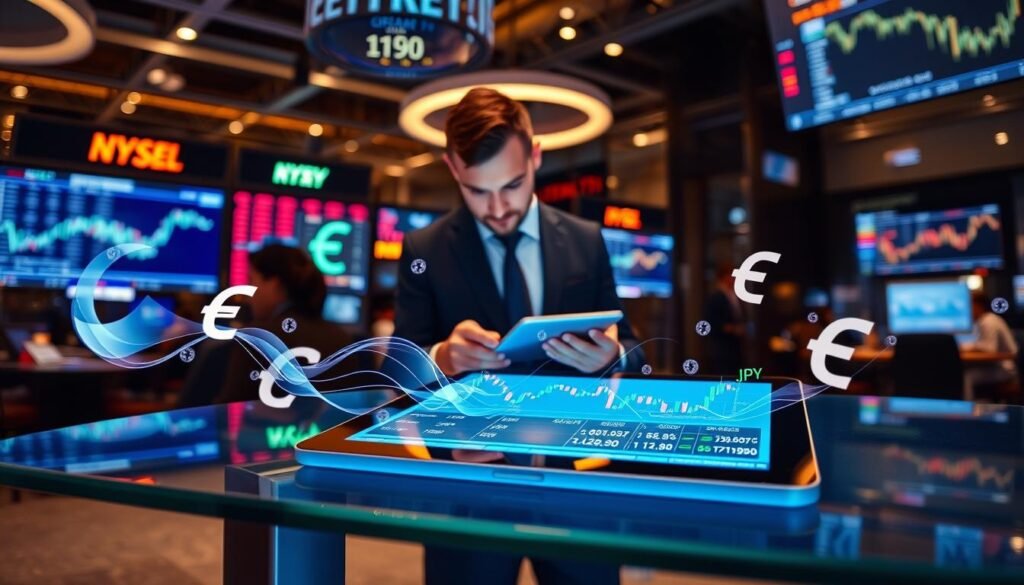
What makes this market special is its incredible diversity of participants. Central banks, multinational corporations, investment funds, and individual traders all participate daily. They’re all connected through electronic networks.
Unlike traditional stock exchanges with physical locations, this market operates entirely online. It follows the sun across different time zones. Trading begins Sunday evening and runs continuously until Friday afternoon.
This 24/5 schedule means you can trade when it fits your life. Whether you’re protecting business interests or exploring new opportunities, understanding this market opens doors to global finance.
The key insight: Foreign exchange is the world’s largest marketplace, accessible to anyone with internet access and a willingness to learn.
What is Forex Trading?
Forex trading is the process of exchanging one currency for another. While many traders aim to profit from changes in currency values, the foundation is understanding how currency pairs and the market function.
Every single trade is a two-part deal. When you buy euros, you are simultaneously selling US dollars. This is why we always talk about currency pairs, like EUR/USD.
Your profit comes from correctly guessing the direction of the price movement. Let’s look at a simple example:
If you believe the euro will strengthen against the dollar, you buy the EUR/USD pair.
If the price rises, you sell later for a profit.
If you believe the euro will weaken, you can also profit by selling first and buying back at a lower cost.
This activity is primarily about speculation. Most participants aren’t exchanging money to buy goods abroad. They are analyzing global economics to profit from the constant fluctuation between world currencies.
Your takeaway: It’s about predicting which of two currencies will outperform the other and making a move to capture that difference.
Understanding Currency Pairs and Market Mechanics
When you first glance at forex charts, you’ll notice something interesting – currencies always appear in pairs, never alone. This pairing system is the foundation of how everything works in this market.
How Currency Pairs Work
Every transaction involves two currencies working together. The currency pair shows the relationship between them.
Let’s look at EUR/USD as an example. If the price shows 1.1000, this means one euro costs 1.10 US dollars. You’re always comparing one currency against another.
Components of a Currency Pair
The first currency listed is called the base currency. It’s always equal to one unit. The second is the quote currency, which shows the current exchange rate.
Popular pairs like EUR/USD and GBP/USD have high liquidity. This makes them easier to trade with tighter spreads.
Your action step: Memorize that the price tells you how much quote currency you need to buy one unit of base currency. This understanding unlocks everything else.
Forex Trading Basics Explained in Simple Terms
Understanding forex comes down to grasping a few fundamental relationships between different currencies. It’s like watching a seesaw – when one side rises, the other naturally falls.
The market price tells you exactly how much of one currency you need to buy another. When EUR/USD moves from 1.1000 to 1.1050, the euro gained value against the dollar. You profit because each euro now buys more dollars.
You can also profit when prices fall. This is called “going short.” You sell a currency pair first, then buy it back later at a lower price. It’s how you make money from weakening currencies.
Here’s a real example: if the US economy strengthens while Europe struggles, you might sell EUR/USD. You’d profit as the euro falls against the dollar.
Your key insight: Success isn’t about perfect predictions. It’s about managing risk and making consistent gains over time. Master predicting direction, choosing positions, and controlling risk.
The Role of Leverage, Margin, and Spread in Forex Trading
Let’s talk about three powerful tools that can either make or break your trading experience. Understanding how they work together is essential for managing your money wisely.
Understanding Leverage
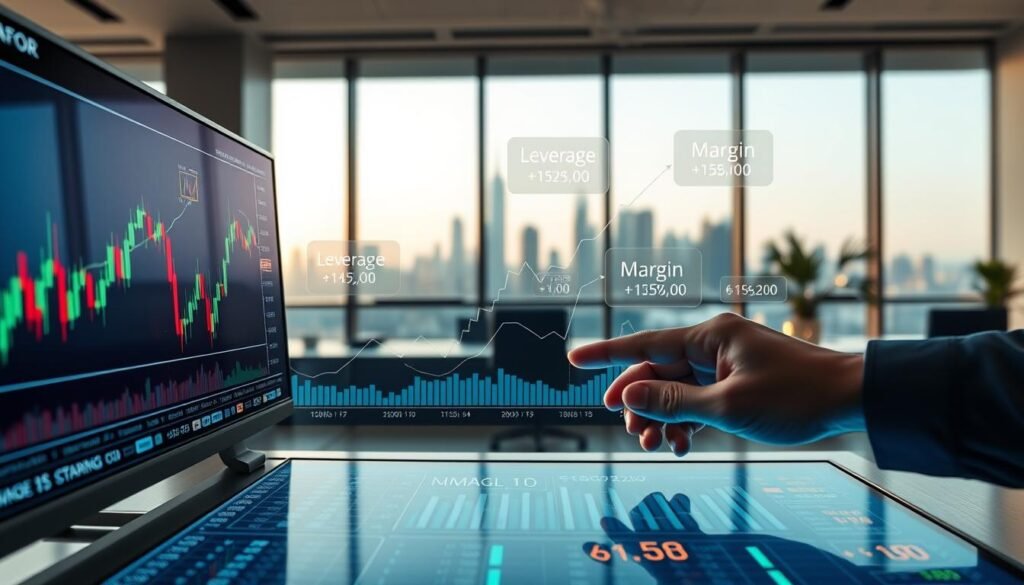
Leverage lets you control large positions with a small amount of capital. Think of it as a financial amplifier.
With 100:1 leverage, your $1,000 can control $100,000 in the market. This power works both ways – it multiplies your profits and your potential losses.
A small 1% move against you could wipe out your entire account. That’s why managing risk is so important when using leverage.
Understanding Margin and Spread
Margin is the security deposit you need to open a trade. Your broker holds this amount to cover potential losses.
If your account falls below the required margin, you’ll get a margin call. This means your positions get closed automatically.
The spread is the difference between buy and sell price. It’s how brokers make money instead of charging commissions.
A tight spread saves you money on each trade. This small difference adds up over time.
Your action plan: Start with low leverage like 10:1. Understand that these tools require careful risk management. Never risk more than you can afford to lose.
Key Forex Terms Every Beginner Should Know
Before you place your first trade, there are three essential terms you absolutely must master. These concepts form the foundation of how everything works in currency markets.
Let’s start with the smallest building block – the pip. This stands for “percentage in point” and represents the tiniest price movement a currency pair can make.
Pip and Pipettes
For most pairs like EUR/USD, one pip equals 0.0001. If the price moves from 1.1000 to 1.1001, that’s exactly one pip.
Japanese yenpairs like USD/JPY work differently. Here, a pip is 0.01 instead of 0.0001.
Some brokers use pipettes for extra precision. A pipette is one-tenth of a pip, giving you more detailed price information.
Lots and Currency Pairs
Lots determine your trade size. Think of them as standardized packages:
Standard lot: 100,000 units of currency
Mini lot: 10,000 units
Micro lot: 1,000 units
The lot size directly affects your potential profit or loss. With a standard lot in EUR/USD, each pip equals about $10.
Here’s an example: if you buy one standard lot at 1.1000 and sell at 1.1050, you’ve captured 50 pips – that’s $500 profit.
Base vs Quote Currency
Every currency pair has two components. The first is the base currency, always equal to one unit.
The second is the quote currency, showing how much you need to buy one unit of the base. For GBP/USD, the British pound is base and the US dollar is quote.
Your action step: Practice calculating pip values with different lot sizes. This skill will help you manage risk effectively from day one.
How the Forex Market Operates 24 Hours a Day
Think about waking up in New York and checking currency prices while traders in Tokyo are already finishing their day. This global connection creates a market that never sleeps during the work week.
The forex market opens Sunday evening in Sydney (Australia) and runs continuously until Friday afternoon in New York, operating 24 hours each weekday across global financial centers.
As one financial center closes, another opens somewhere else in the world. This creates a perfect cycle for currency exchange.
Global Trading Sessions
There are four main sessions that keep the market moving. Sydney starts the day, followed by Tokyo, then London, and finally New York.
Each session has its own personality. Asian sessions tend to be quieter with smaller moves. European and American sessions see much more action.
24-Hour Market Dynamics
Currencies move most during their “home” time. The euro gets busy during London hours, while the dollar shines in New York.
The sweet spot occurs when London and New York overlap. Between 8 a.m. and noon EST, you’ll see the highest volume and biggest price movements.
This structure means you can find active tradinghours that fit your schedule. Whether you’re an early bird or night owl, there’s always opportunity.
Your action step: Match your trade times to the currencies you want to trade. Focus on sessions when your chosen pairs are most active for better results.
Benefits and Risks of Forex Trading
What makes forex so appealing is also what makes it challenging – the constant movement of prices. The same factors that create opportunity can also lead to significant losses if you’re not careful.
The forex market offers incredible liquidity with trillions traded daily. This means you can enter and exit positions easily. You can also profit in either direction – whether prices rise or fall.
Starting requires relatively little money compared to other markets. The 24-hour schedule fits around your life perfectly. This flexibility is a major benefit for any trader.
However, that same volatility creates serious risk. Currency values can swing dramatically in seconds. News events or economic data can trigger rapid price changes.
Leverage amplifies both gains and potential losses. A small move against your position can wipe out your account. Many beginners lose money by underestimating this risk.
Emotions like fear and greed often derail new traders, leading them to overtrade or abandon their plans, especially since market conditions change instantly and what worked yesterday might fail today.
Your honest assessment: Forex trading offers real profit potential and flexibility. But it demands education, discipline, and strict risk management. Treat it as a skill to master, not a gamble.
Using a Forex Broker and Trading Platforms
Your journey into global finance begins with choosing the right platform and service provider. You can’t access currency markets directly. You need a broker who connects you to the global network.
Think of your broker as your gateway. They provide the software, display real-time prices, and execute your orders. This relationship is essential for successful participation.
Features of Reliable Trading Platforms
Regulation should be your first priority. Look for brokers authorized by bodies like the CFTC or FCA. This protects your funds and ensures fair practices.
The trading platform itself needs to be user-friendly. MetaTrader 4 and MetaTrader 5 are both widely used platforms, offering intuitive charts and order placement.
MT5 provides additional features, while MT4 remains popular for simplicity.
Demo account access is non-negotiable for beginners. Practice with virtual funds before risking real money. This helps you learn the platform and test strategies safely.
Compare spreads, available currencypairs, and customer support quality. Different brokers serve different needs. Take your time to find the right fit.
Your action step: Open demo accounts with two regulated brokers. Test their platforms for at least two weeks. Only deposit real funds when you feel completely comfortable.
Personal Insights
When I first started exploring forex, I remember feeling overwhelmed by all the numbers and charts.
What helped me most was treating it like learning a new language—I focused on understanding small pieces at a time, like currency pairs or pips, and celebrated small wins in my demo account.
I also learned early on that stepping back after a losing trade is just as important as celebrating a successful one; keeping emotions in check saved me from repeated mistakes.
Over time, I realized that consistent practice and reflection made me more confident than chasing quick profits ever could.
Educational Resources and Demo Accounts for Beginners
Imagine having a training ground where mistakes don’t cost you anything but still teach you everything. That’s exactly what demo accounts offer beginners in the currency market.
Most reputable brokers provide practice accounts with virtual funds. You get to test strategies and learn platform features without financial risk. This builds confidence before using real money.
Free Courses and Webinars
Platforms like IG Academy offer comprehensive learning materials, often requiring free account registration to access full courses and webinars.
These resources cover everything from basic concepts to advanced techniques. You can access video lessons, articles, and live sessions.
Free webinars help you understand market dynamics. They teach technical analysis and risk management strategies. Many are tailored for different experience levels.
Keeping a trading journal transforms your learning experience. Record each decision, outcome, and emotional state. Tools like Edgewonk make this process efficient.
Reviewing your journal helps identify patterns in your decision-making. You’ll see what works and what needs improvement. This objective analysis accelerates your growth as a trader.
Your action step: Open a demo account today and commit to daily practice. Combine this with educational resources from trusted sources.
Tips for Effective Risk Management in Forex Trading
Let me share something most beginners discover the hard way: protecting your money matters more than picking winners. You can be right about market direction only 40% of the time and still profit with solid risk control.
Stop-Loss Strategies
Your stop-loss order is your best friend. It automatically closes positions when prices move against you by a preset amount. This prevents small losses from becoming account disasters.
Never remove or move your stop-loss hoping a trade will recover. Set it based on your analysis and leave it alone. Emotional decisions often lead to larger losses.
Risk-Reward Considerations
Before entering any trade, identify your exit points. Know where you’ll take profit and where you’ll cut losses. Aim for potential rewards at least twice your risk.
Position sizing works with stop-losses. Decide how much money you’re willing to lose first. Then calculate your trade size based on where your stop needs to be.
Most professionals risk only 1-2% of their account per trade. With $1,000, that means risking $10-$20 maximum. This approach helps you survive losing streaks.
During major news events, consider staying out of the market. Prices can gap violently, causing slippage past your stop-loss. If you’re already in a trade, tighten your stop before announcements.
Wait 30-60 minutes after news releases before entering new positions. Markets need time to settle after volatile moves. For deeper insights, explore this comprehensive guide to currency risk management.
Your action plan: Use stop-losses on every trade, risk no more than 2% per position, and maintain disciplined risk-reward ratios. Consistency beats occasional big wins.
Conclusion
The journey from beginner to confident trader starts with mastering these fundamental concepts. You now understand how currency pairs work and why risk management matters most.
Remember that this global market operates around the clock, giving you flexibility. For a deeper look at how foreign exchange works, explore quality educational resources.
Your next steps are clear. Practice with demo accounts first. Build consistency before using real capital. The market will always be there when you’re ready.
Your final takeaway: Focus on learning, not quick profits. Smart preparation today prevents costly mistakes tomorrow.
Disclaimer: This article is for informational and educational purposes only and does not constitute financial, investment, or legal advice. Always conduct your own research and consult a qualified professional before making any financial decisions.
FAQ
What is the foreign exchange market?
The foreign exchange market, often called forex, is where people buy and sell different currencies. It’s the largest financial market in the world, operating 24 hours a day. Think of it as a global marketplace for national money.
How do I make money trading currencies?
You profit by buying a currency pair when you believe its value will rise and selling it when the price increases. If you think the value will drop, you can sell first and buy back later at a lower price. Your goal is to correctly predict the direction of the price movement.
What is a pip in forex?
A pip is a tiny unit of measurement for price movement in a currency pair. For most currency pairs, a pip is the fourth decimal place, but for pairs involving the Japanese yen, a pip is the second decimal place. It helps you calculate your profits and losses from each trade you make.
Why is leverage so important in forex?
Leverage allows you to control a large position with a relatively small amount of your own capital. While it can magnify your gains, it also significantly increases your risk, meaning losses can exceed your initial deposit. It’s a powerful tool that requires careful management.
Do I need a lot of money to start?
No, you don’t. Many brokers allow you to open an account with a small amount of money. You can also practice with a demo account that uses virtual funds, which lets you learn the mechanics without risking any real capital.
What is the best time to trade?
The market is most active when the trading sessions in London, New York, and Asia overlap. This is when you’ll typically see the highest volume and biggest price movements. The best time for you depends on your strategy and when you are available to monitor your positions.
How do I choose a good forex broker?
Look for a broker that is well-regulated, has a user-friendly trading platform, and offers competitive spreads. It’s also important to check their customer support and the educational resources they provide for beginners.
What is the biggest risk I should know about?
The biggest risk is the potential to lose more money than you initially deposited due to the use of leverage. This makes risk management, like using stop-loss orders to limit potential losses on each trade, absolutely essential.